

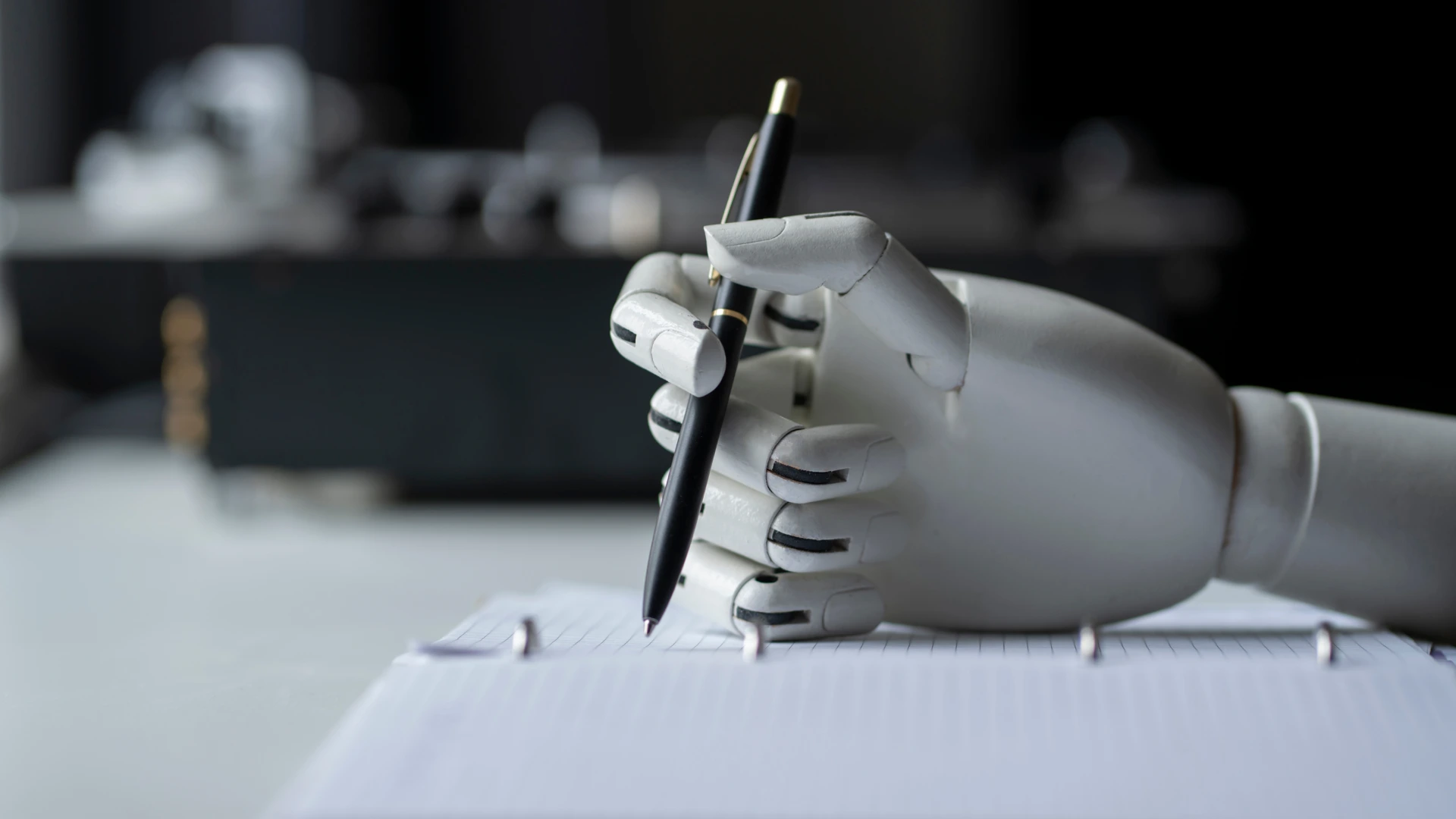
Use AI to make your team better first, then decide what that means for staffing. If AI reliably does the work at the same quality for less money, a smaller team can be the right business decision. Cutting people before you’ve proven that is a gamble, because you lose knowledge and judgment the software doesn’t have, and the decision is hard to reverse. My own bias is toward keeping good people and giving them better tools. But the sequence matters more than the preference: improve the work, prove the economics, then make the staffing call.
AI enablement is part of what I sell, so I have a stake in the “make your team better” side of this.
Why cutting first is the riskier move
For an owner watching payroll climb, using AI to reduce labor costs is an understandable idea. In a recent video I said that using AI to automate away headcount is, in my opinion, “a sure-fire way to run your company directly into the dirt.” I don’t have anything against automation, and doing the same work at the same quality with fewer hours is a real gain. “I just have a problem with automating away quality,” and cutting before you know what the AI can actually carry is how that happens.
The saving can be smaller than it looks. AI saves time on drafting, research and admin, but some of it comes back as review, often for whoever receives the work. (More on that in how to judge work your team made with AI.) A saving only counts once you’ve subtracted that cleanup, plus the licenses, setup, training and supervision.
The work can get worse in ways customers notice, if fewer experienced people are left to catch what the tool gets wrong and nothing reliable replaces them. As one CIO put it to me: “It will always give you an answer. The question is, is it right or wrong?” With fewer experienced people in the loop, fewer people are asking that question.
And it’s hard to undo. The people you let go take with them knowledge of your customers, your exceptions and your history that the AI never had. In Orgvue’s 2025 survey of 1,163 senior leaders at large organizations in eight countries (at least 2,000 employees in the US, Canada, the UK and Ireland), 39% said they’d made employees redundant as a result of deploying AI, and 55% of that group said they’d made wrong decisions about those redundancies. It’s a self-reported survey of bigger companies than most of my readers run, and Orgvue sells workforce planning software, so it isn’t proof that AI-driven cuts fail. It is a fair warning about deciding before you have the evidence.
What making your team better actually takes
The other approach uses AI to give your people better tools, so they get faster and better at what they already do. That’s the one I’d start with. It doesn’t happen because you bought licenses and told everyone to use them.
Practice time. AI is a tool, and people have to put their hours in with it before it makes them better. I’ve pushed my own team hard on this, and the gap between people who’ve put in the effort and people who haven’t is obvious. The ones who haven’t use it like a vending machine: request in, take whatever comes out, start from scratch next time. Nothing gets built into a repeatable way of working, so the results don’t improve much.
A standard for good. AI needs something to be measured against. Your experienced people know which exceptions matter, what customers expect and which mistakes are expensive. Get that knowledge out of their heads and into examples, review criteria and workflows the whole team can follow. Then test which decisions the AI can handle, which need review and which still belong with an experienced person.
Someone who owns the result. When a proposal or a recommendation is wrong, the customer still expects a person to answer for it. For anything a customer sees, someone should own it and be willing to stand behind it.
In one AI enablement project this year, a business development leader brought me two problems: his sellers were losing time to administrative work, and his younger reps needed support while putting proposals together. One rep was keeping a list of business he’d lost because he couldn’t get proposals out fast enough. That’s a good place to test AI, because the question is concrete: can it shorten proposal turnaround without lowering quality, and do faster proposals win more business? It was paused before we could measure anything, so I won’t claim any results. But it’s the kind of test that tells you something.
Where a smaller team is the right answer
The two approaches are often stages of the same process rather than rival choices. You introduce AI, people get more capable, the team handles more, and at some point you find some work has genuinely gone away. What you do with that capacity is a business decision, and there are several honest answers: take on more work, raise the quality, avoid hires you’d otherwise make, or run with fewer people. What doesn’t count is time saved that drifts into nothing; the gain only shows up if it goes somewhere.
Growing without adding headcount. If the team you have can carry more customers or more work as you grow, you hire fewer people than you otherwise would. Nobody is replaced, and for a growing company that may be the most useful form the payoff can take.
Not replacing a role when someone leaves. If AI has absorbed enough of a role’s work, leaving it unfilled when the person moves on is a quieter decision than a layoff. Check the workload and skills first, though: the person who leaves isn’t always in the role where the work disappeared.
Running with fewer people after the work changes. Sometimes AI removes enough work across several roles that you need fewer people. That can be a responsible decision, especially when the business’s health depends on it. Just make it after the remaining team has shown it can handle the real workload, including the busy weeks, the absences and the odd cases, and not on the strength of a demo.
You may not need much outside help to do any of this. A focused pilot on one job and an internal owner who’ll see it through can be enough.
Before you change staffing
Answer these with evidence from your own business, not a vendor’s demo:
- What work has actually disappeared? List the specific tasks AI now completes reliably, rather than assuming a whole job is gone.
- What does the new process cost in full? Software, setup, training, supervision, corrections and the people who still handle exceptions. Hours freed up create capacity; they only become a lower cost when spending actually goes down, and hours scattered across forty people don’t, on their own, add up to a role you can remove. How to measure whether AI is paying off covers how to keep hours and dollars separate.
- Is the work as good? Compare real AI-assisted work with the old process on accuracy, turnaround and what customers experience.
- Can the remaining team sustain it? Test normal volume, busy periods, absences and unusual cases before removing capacity.
- What are you doing with the gain? Decide whether the value comes from growth, better work, avoided hiring, lower cost or a mix.
If AI has reliably removed enough work, quality is holding and the remaining team can manage the exceptions, a smaller team may be justified. If you’re still guessing about any of those, you don’t have the evidence to make that decision yet.
Working out what AI should change in how a team works, before anyone touches headcount, is what my AI implementation consulting covers. Reach out if you’re facing that call.