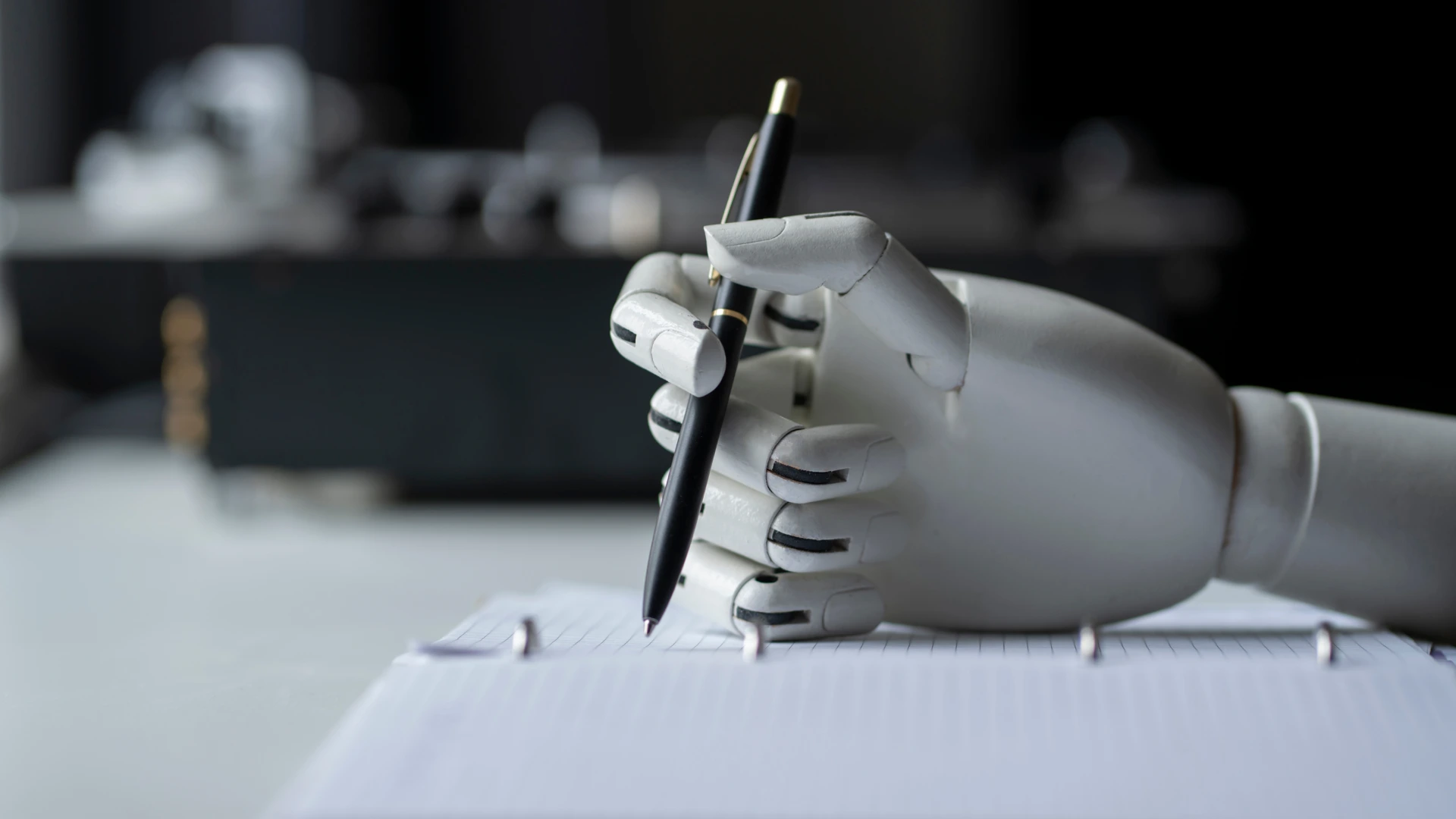


Judge it on whether a person clearly owns it: someone read every word, checked the facts that matter, can defend every claim, and cut it to what the reader actually needs. Workslop, the term researchers at BetterUp Labs and the Stanford Social Media Lab introduced in Harvard Business Review in September 2025, is AI-assisted work that looks finished and isn’t. Looking generated is a fair warning sign and a reason to check harder, and the check is what decides.
I lean on AI heavily in my own company, and I’ve been on both ends of this: the leader reading work that leaned on AI, and the one defending work that got called AI slop when it wasn’t.
What workslop is, and why it costs more than it looks
BetterUp defines workslop as “AI-generated content that looks good, but lacks substance.” In its online survey of 1,150 full-time U.S. desk workers in September 2025, 40% said they’d received some in the past month, and they estimated each incident took about two hours to deal with. Those are people’s own estimates, but the pattern is familiar to anyone who reads a lot of AI-assisted work.
The cost moves to whoever receives the work. I put it this way in a video about AI and teams: the time saving you think you’re getting often isn’t one, because “people have to sort through kind of the slop and ask a lot of questions that they wouldn’t have had to ask for otherwise.” If the sender saves an hour and three colleagues each lose one working out what it means, the company is two hours down.
That’s also why workslop can vanish from a time-saved number that only counts the person who made the work. If you’re measuring whether AI is paying off, it’s one of the costs that sits on the other side of the ledger.
Why “it looks AI” matters
Your readers notice. In my experience, the more lazy AI output people run into, the more sensitive they get to it. In a short video in September I said people are “starting to wonder if there’s an actual human behind the strategy or the output or the deliverable.”
The signs are familiar: documents far longer than the question needed, confident claims nobody checked, a polished structure with nothing particular inside it. And one obvious mistake does disproportionate damage. As I said in that video, it “is going to make them wonder what else went unchecked in that whole deliverable.” A reader who finds one invented fact stops trusting the other forty pages.
So looking generated has a real cost, even when the thinking behind it was sound. That’s why I ask my own team to make sure nothing they send reads like unedited AI. The tool is fine to use, and I’d rather people say so. What I don’t want is the reader doing work the writer skipped.
Why “it looks AI” isn’t proof
The opposite mistake is just as easy. Someone on my team once called a board-level document obviously AI-generated. It had been worked over word by word across five or six two-hour sessions. What read as machine-made was the formal, comprehensive register its readers, a board, actually use. I agreed with the instinct to watch for slop. I also asked people to be careful passing that judgment, because a long, thorough document isn’t proof that nobody thought about it.
Being called lazy for using AI is a real risk, too. In four experiments with more than 4,400 people published in PNAS in 2025, Duke researchers found that people who used AI at work were judged as lazier and less competent, and expected to be. The penalty was weaker among evaluators who used AI regularly, and in a hiring experiment it was offset when AI was clearly useful for the task. The participants were judging strangers from descriptions and profiles, not colleagues they knew. Still, my own read for a leader is simple: if using AI gets people judged, they’ll hide it, and hidden AI use is much harder to review than open use.
So treat the look as a reason to read more carefully. Then judge what’s actually there.
How to judge a piece of AI-assisted work
Most of these questions apply to any work. AI just makes them more urgent, because polish no longer tells you how much thinking went into something.
- Can the person who sent it explain it? Ask them to walk you through the key claim and why it’s right. If they can’t explain the central claim and the evidence behind it, it isn’t ready to rely on, whatever tool wrote the first draft.
- Is every fact, figure and name checkable? Pick the two or three the decision depends on and check them. An invented source or person is the fastest way to find out whether anyone read it.
- Does the evidence support the conclusion? A report can get every fact right and still recommend something those facts don’t justify.
- Is it as long as the reader needs, or as long as the tool made it? Length is cheap now, and the reader pays for every page they didn’t need.
- Does it say something particular? Would it read the same for any company in your industry? Generic advice with your logo on it is workslop, however polished it looks.
- Does it answer the question that was asked? AI is good at answering a nearby, easier question very thoroughly.
If it fails, talk about ownership. My own version of that conversation has been short: you can’t call something done if it’s plainly wrong, because it means you didn’t read your own work. Workload can be a real and separate problem, and worth fixing, but it doesn’t change who answers for the result.
House rules worth setting
These sit next to whatever legal or data-privacy AI policy your company has. They’re about quality, and who answers for it. My own rule is simple: we use AI openly, but nothing goes out that reads as unedited AI. Under it sit a few practical rules:
- Whoever sends it owns every word. AI drafted it, a colleague edited it, it doesn’t matter. The name on it answers for it.
- A person reads all of it before it leaves, the whole thing and not just the summary, and checks the claims that matter.
- Match the review to the stakes. A routine internal update needs its owner’s read. Work that drives a big decision, commits the company or goes to a client needs its key claims checked, and sometimes a second reviewer.
- Keep it to what the reader needs. Cut anything that doesn’t help them understand, decide or act.
- Use AI in the open. Nobody should have to hide that they used it, and leaders should say how they use it themselves. Open use is what makes review possible.
- Disclose where it’s owed. AI-generated images, anything a client was promised would be done a certain way, and anything regulated. Decide those in advance rather than case by case, and where there may be a legal obligation, ask your lawyer.
- Say what reads as AI, and why. Under the rule above, “this reads like AI” is fair feedback. It helps more with specifics: what’s wrong, what’s missing, what’s too long, what’s generic.
If you buy creative or marketing work from outside, the same thinking applies, with a few extra questions. I’ve listed what to ask an agency about its AI use in AI vs human creativity.
Have the conversation
Pick one piece of AI-assisted work you’ve received this month. Ask the person who sent it to explain the central recommendation, show the evidence behind it and say what they didn’t check. Then agree what gets checked before that kind of work goes out again. You’ll learn more from that conversation than from any policy document, and it will tell you which house rules your team actually needs.
My AI implementation consulting holds AI to the same test: whether the work actually got better. Tell me what you’re seeing.