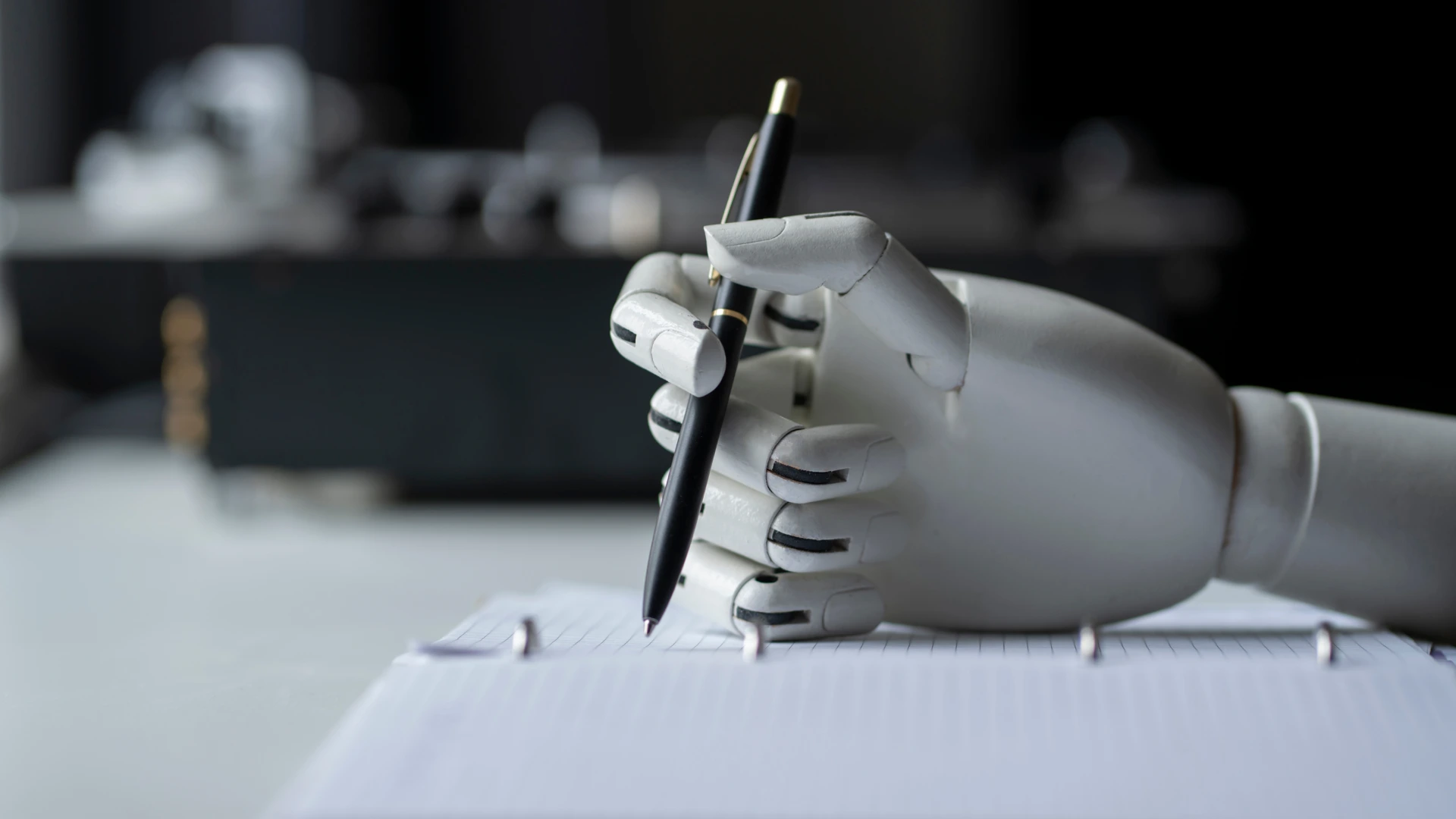

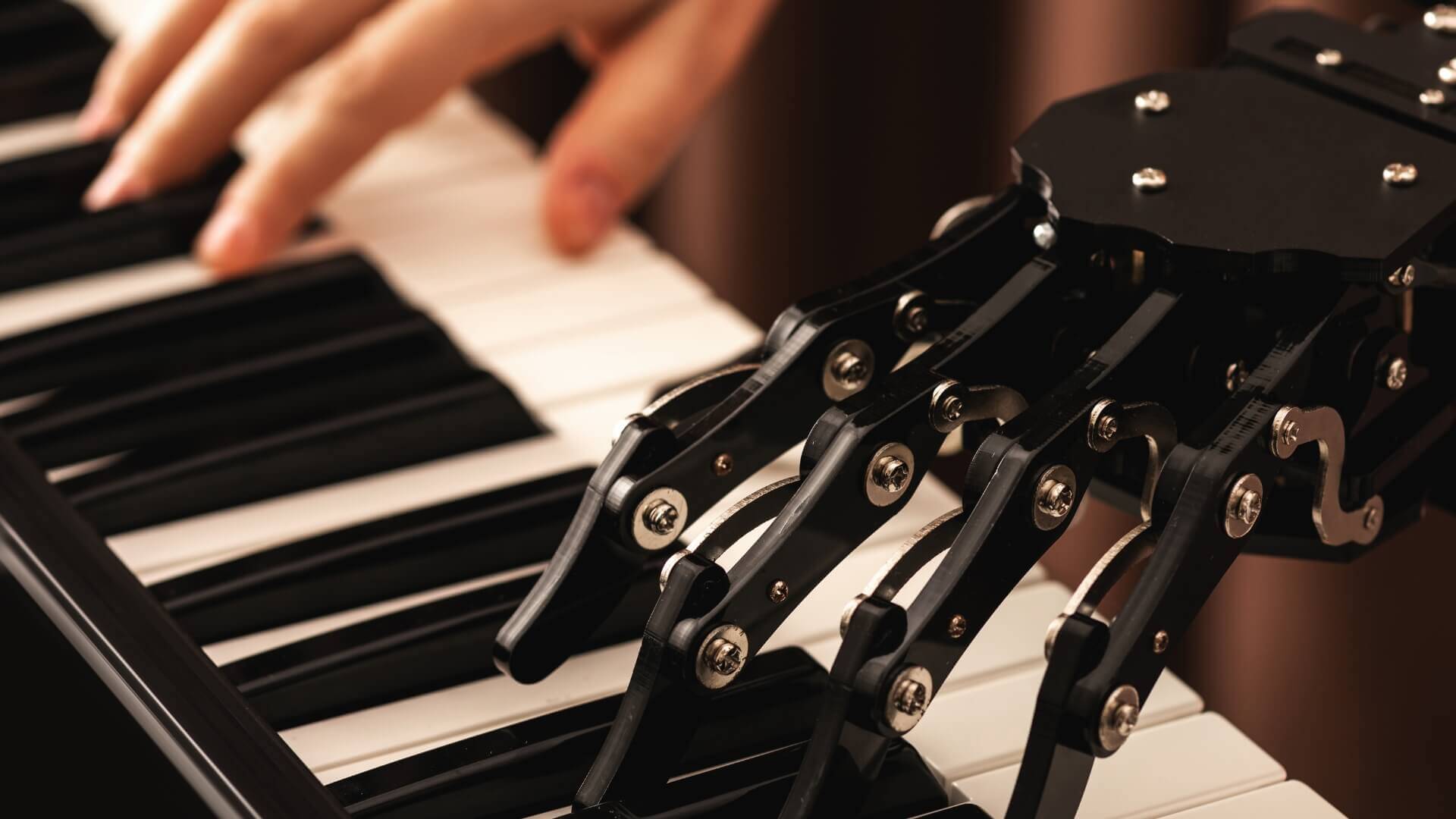
Most owners have tried it by now. They’ve had AI write a proposal, draft a strategy or put together a piece of creative, and what came back looked good enough for very little effort. So the fair question is: what am I still paying designers and agencies for, and is the difference worth it?
My answer: AI has made competent-looking creative work much cheaper to produce, and some research suggests it also makes people’s work more alike. What you pay people for now is the part that makes your work yours:
- deciding what to say and who it’s for
- why a buyer should pick you over the two other tabs they have open
- judging whether what came back is actually any good
Passable is essentially free now
I made a short video about this from the buyer’s side.
“Building things with AI has made passable essentially free,” as I put it there, and that’s great right up until it isn’t. The trouble starts when the work has to carry a real buying decision. For a scrappy startup or a company that mainly needs to look credible, AI-made work can be the right call.
What’s changed is the signal. A decent-looking brand or site used to tell a buyer this was a real company. Now that anyone can reach that bar, it barely registers, and a lot of what I review blends into the same decent-looking, decent-sounding sameness. The output is a starting point, and the work that matters is what someone does with it.
None of this makes AI-assisted work bad. How something was made and how good it is are separate questions. An AI-assisted piece can carry a real decision, and an expensive custom one can fail to. If someone hands you work that reads like unedited AI, treat that as a warning sign worth a closer look, then judge it on whether it holds up and whether someone has clearly owned it.
What the research says about AI and creativity
The findings most useful to a buyer are about what happens when people use it.
It lifts individual work and narrows the range. In a 2024 study in Science Advances, Anil Doshi and Oliver Hauser gave some writers AI-generated ideas for short stories. Those stories were rated more creative and better written, with most of the gain among the least creative writers, but they were also more similar to each other than stories written without AI. That’s a study of short stories, not brand work, but the risk of everyone starting from similar AI suggestions carries over.
It helps inside its range and hurts outside it. In a 2023 Harvard Business School experiment with 758 Boston Consulting Group consultants, people using AI on tasks within its capabilities finished about 25% faster and produced significantly better work. On a task chosen to sit just outside what the AI could do well, they were 19% less likely to get the right answer. For a buyer, the lesson is that confident-looking AI output can make a team faster or send it the wrong way, and someone has to know the difference.
Choosing well became more valuable. A 2024 study in PNAS Nexus of more than 4 million artworks found that artists who adopted text-to-image AI produced more and got more favorable reactions, while the average novelty of their work declined, even as the most novel pieces got more novel. The researchers concluded that coming up with ideas and filtering the model’s output were the skills that mattered.
For a company that needs to stand out, that’s the trade. AI raises the floor, which helps a company that’s behind and does little for one that needs buyers to tell it apart.
What AI is good at in creative work
Used well, it genuinely helps creative teams:
- first versions of wireframes, layouts and drafts in hours rather than days
- dozens of variations on a headline, layout or image direction to react to
- production work like resizing, reformatting and adapting one piece for many channels
- pressure-testing an idea, arguing the other side or finding what a brief left out
I use it every day. I redesign pages on my own site by talking them through with Claude Code in real time, with Maria, my wife and business partner, or on my own.
What still needs a person
My agency wrote up one example this year: building website wireframes for a healthcare IT company with AI, live, in a room with the team. AI produced a polished first pass quickly. Then the people went to work on it:
- The team reframed what the site was for, around credibility rather than acquisition. As the write-up puts it, “AI didn’t generate that insight. It couldn’t have.” The team knew why it was right for this client.
- AI produced three sections in a row with identical box layouts, because boxes are a clean, logical pattern. The designer spotted the monotony in seconds.
- AI defaulted to a conventional call to action. The person who’d been on every client call knew how the client actually talks.
What sped up was the feedback: rounds that would have taken days happened in minutes. The write-up’s conclusion is the one I’d want every buyer to hear: when execution is nearly instant, the bottleneck shifts to the quality of the strategic inputs and the expertise of the people judging the output.
Where AI is enough, and where to pay for judgment
Spend where the work has to win you a customer. Everywhere else, good enough is fine. The same thinking applies to work that has to keep a customer, hire someone or protect your reputation: the higher the cost of getting it wrong, the more judgment it deserves.
| Work | Sensible default |
|---|---|
| Resizing, formatting, variations, rough drafts | AI-first |
| Research summaries, early concepts, headline options, wireframes | AI-assisted, reviewed by a person |
| Positioning, brand direction, messaging, campaign ideas | A person accountable for the decision, with AI assisting |
| Logos and signature brand assets | A person accountable for the decision, with the choices documented |
| Images of real people, your team or your customers | Real photography, or AI only for light edits you’d disclose |
| Claims, regulated content, anything high-stakes | Reviewed every time by someone qualified to judge it |
The closer the work gets to a consequential brand decision, the less it matters who made the first draft and the more it matters who made the final call.
I hold my own site to that. I use AI all day, and I still replaced the AI-generated image of me on my homepage with a real photograph, because it was so clearly an AI version of me. Looking generated is one of the ways work fails to hold up. If something looks generated to you, assume it will look that way to the people you’re trying to win, and in places where they expect a real person or real care, that costs more than it saves.
How to judge creative work now
Polish used to be a fair stand-in for effort and skill. Now that anyone can produce it, ask harder questions of the work itself. These are adapted from the ones I put in the video, and I ask them of work I’m reviewing:
- Why would a buyer pick us over the two tabs sitting open next to ours?
- Which of the claims would actually read as proof?
- Does the experience of using it move a business objective forward?
- Do the design decisions support something real, or are they decoration?
Ask for the brief as well as the portfolio, too. Polished work is easy to find; the reasoning that led to it is what you’re paying for. And since a good presenter can explain any decision, push past the explanation: what alternatives did they consider and why did they drop them, which choices rest on what they know about your buyers rather than taste, what was tested and what’s still an assumption, and how will you both judge whether it worked after launch? And be honest about why you like what you like: you know your business well enough to fill in gaps a new buyer can’t.
What this means for what you pay for
If AI is doing a meaningful share of the production, the gain should show up somewhere you can see it: turnaround time, cost, the number of options explored, the amount of refinement or the senior attention going into the work. Ask where it went.
Strategy, direction, the brief and the judgment about what’s good are now most of the value, so be wary of a provider who cuts those to hit a lower price. AI should speed up some of the work behind that judgment too, though, so ask what improved, what costs less, and why the remaining human work is worth the fee. The way to close the last gap in quality, as I said in the video, is to “put AI into the hands of tastemakers, into the hands of 20-year veterans, and let them go from there.”
What to ask a designer or agency about AI
Almost everyone uses AI now, so ask how they use it. These questions get at that.
- Where in your process do you use AI, and where don’t you? A good answer: specific steps and tools, and which steps stay with a person.
- Who makes the decisions? A good answer: what to say, who it’s for and what it should look like are people’s calls, made by someone who knows your business.
- Who reviews everything before I see it, and against what standard? A good answer: a named person, and a standard you could read: your brand, your goals, your buyers.
- What in the final work will be AI-generated, and will you tell me? A good answer: they tell you before you see it, especially for images, and can say where every image came from.
- Will any images of people be generated? A good answer: generated people can read as fake to the people you’re trying to win, so ask for real photography where it matters.
- What of our information goes into which AI tools, and on what terms? A good answer: they know which tools see your files, briefs and customer data, and that those tools don’t train on it without your agreement.
- How does AI change your pricing or timeline? A good answer: if they say it doesn’t, ask where the time goes now.
- Can you document the human choices in anything we’ll want to protect? A good answer: for a logo or signature visual, a record of who decided what. Ownership is a legal question, so ask an attorney too.
Who owns AI-generated creative work?
Ownership is a legal question, and for anything you’ll build a brand on, it’s a call for an attorney, not for your designer or for me. The basics are worth knowing before that conversation. The US Copyright Office’s 2025 report on copyrightability says copyright protects human authorship, and that prompts alone generally don’t give enough control to make someone the author of what a model produces. Human creative choices, like selecting, arranging or substantially changing AI material, can be protected. Trademark works differently again, so have a trademark attorney check any logo or name before you build on it, and ask whoever made it to document how. Owning a deliverable under your contract, copyright protection and a registered trademark are three separate questions, and an attorney can tell you what documentation you’ll need for each.
Will AI replace designers?
From the buyer’s side, the more useful question is which parts of the work AI replaces. Production is changing fast. The designers and agencies worth hiring now use AI heavily for the making and can show you clearly where their own judgment went in.
If the work looks fine but could belong to anyone, the fix usually starts upstream, with what you’re saying and who it’s for. That’s the work I do as a brand consultant. You can start a conversation on Work With Me.